If you run a business in Cyprus, you’ve probably asked yourself:
“How much does IT support actually cost in Cyprus – and what should I be paying for?” How much does IT support cost often depends on whether a business chooses basic helpdesk services or fully managed IT services Cyprus.
You’re not alone. Between “a guy who helps us when something breaks” and fully managed IT services in Cyprus, pricing can feel like a black box. Some quotes look suspiciously cheap. Others look like a second rent. The Digital Security Authority of Cyprus regularly publishes guidance and updates on local cyber incidents, offering businesses a clear view of the evolving threat landscape:
This guide breaks it down in plain language so you can:
- Understand what you’re really paying for
- See typical pricing structures
- Avoid “cheap now, expensive later” mistakes
- Know what to ask before choosing a provider
1. What Do You Actually Get When You Pay for IT Support?
When asking how much IT support costs, businesses quickly discover that prices for IT services Cyprus vary based on the size of the team and the complexity of their systems.
Before talking numbers, it helps to be clear on what’s inside the box.
IT support in Cyprus usually covers a mix of:
- Helpdesk support
- Remote support for day-to-day issues
- “My email isn’t working”, “the printer won’t print”, “Teams won’t open”
- On-site visits
- When something physically breaks or needs hands-on attention
- Network issues, cabling, hardware installations
- Proactive monitoring & maintenance
- Keeping PCs, servers and network gear updated, patched, and healthy
- Monitoring for failures or problems before they hit users
- Cybersecurity basics
- Antivirus / endpoint protection
- Firewall configuration
- Basic security policies and user account management
- (Higher-end packages add more advanced protection – we’ll touch on that later)
- Backup & recovery
- Automatic backups of critical data
- Testing restores so you’re not surprised when you actually need them
- Consulting & planning
- Helping you plan upgrades
- Cloud migration, new offices, new systems
- Budgeting your IT spend for the next 1–3 years
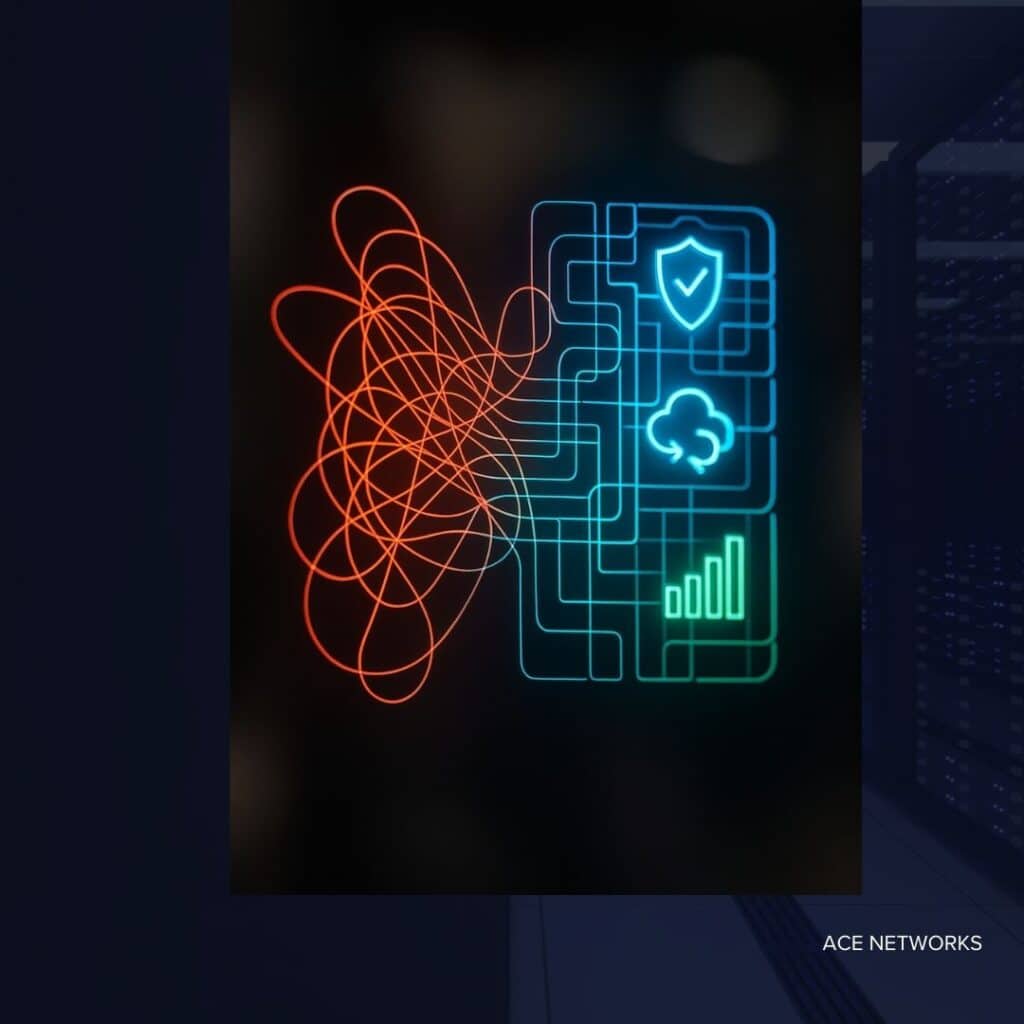
When you see “managed IT services Cyprus” in a proposal, it usually means a bundle of these, delivered for a predictable monthly fee.
2. The Main Factors That Influence IT Support Cost in Cyprus
How much does IT support cost is a question many SMEs ask when comparing providers, especially when evaluating what’s included in each IT services Cyprus package.
There’s no one-size-fits-all price because your needs might be very different from the company next door. Pricing is usually shaped by:
2.1 Number of Users & Devices
Most providers use one of two approaches:
- Per user per month
- Per device per month (PCs, laptops, servers, sometimes mobiles)
More people and more devices = more support time, more licenses, more monitoring.
Rough rule: A 10-person office is far cheaper to support than a 50-person multi-branch company, even if they’re in the same industry.
2.2 Type of Support (Break-Fix vs Managed)
You’ll hear these two a lot:
- Break-fix
- You pay only when something breaks
- Usually hourly billing
- No proactive work, no monitoring
- Looks cheap… until something major hits
- Managed IT services
- Fixed monthly fee
- Includes monitoring, updates, helpdesk, strategy
- Focus on prevention and uptime, not just firefighting
If your business heavily depends on systems working all day (which is most companies now), managed support is usually better value in the long run.
2.3 Service Hours & Response Times (SLA)
Support from “9–5, Monday to Friday” costs less than:
- Extended hours
- Nights & weekends
- Critical SLAs (e.g. 1-hour response for urgent issues)
If your business runs evenings, weekends, or 24/7, or if downtime is very expensive for you (e.g. hotel, clinic, logistics), you’ll need stronger SLAs, which adds some cost – but saves you in lost revenue.
2.4 Cybersecurity Level
In 2025, cyber risk is not theoretical anymore. Phishing, ransomware and other cybersecurity threats in Cyprus hit businesses of all sizes. For real-time alerts, national statistics, and technical advisories, the Cyprus Computer Security Incident Response Team (CSIRT-CY) provides official threat notices and incident handling resources.
Basic IT support might include:
- Antivirus
- Basic firewall
- Standard updates
More advanced protection (often offered as an add-on or in a higher tier) might include:
- Email filtering & anti-phishing tools
- Endpoint detection & response (EDR)
- 24/7 security monitoring
- Security awareness training for your staff
- Incident response plans
The more your business relies on sensitive data (legal, finance, healthcare, online sales), the more it’s worth investing in the higher-security tiers of IT services.
2.5 On-Prem vs Cloud & Complexity
Other things that affect cost:
- Do you have servers on-site, or is most of your work in the cloud (Microsoft 365, Google Workspace, etc.)?
- Do you have multiple offices (e.g. Nicosia + Limassol + Larnaca)?
- Any special software (ERP, medical systems, legal case systems) that needs extra care?
More complexity = more planning, more monitoring, and usually slightly higher cost. But a good provider will explain exactly why.
3. Typical Pricing Models for IT Support in Cyprus
Let’s look at the common ways IT support is priced so you can compare apples to apples. How much does IT support cost becomes clearer when businesses understand the difference between ad-hoc hourly assistance and comprehensive managed IT services Cyprus.
Important note: the examples below are illustrative ranges, not fixed quotes. Exact numbers vary by provider, service level and your specific environment.
3.1 Hourly / Ad-Hoc Support (Break-Fix)
This is the “call us when something’s broken” model.
- You pay a flat hourly rate for remote or on-site work
- Often used by very small businesses or those with minimal IT reliance
- No monitoring, no proactive maintenance
Typical characteristics:
- Good if you:
- Have <5 users
- Rarely need help
- Can tolerate downtime and unpredictability
- Risky if you:
- Rely on systems every day to serve customers
- Have compliance or data protection responsibilities
- Can’t afford a multi-hour or multi-day outage
3.2 Per-User Managed IT Support
This is the sweet spot for most SMEs in Cyprus.
You pay a fixed fee per user per month, and the provider handles:
- Helpdesk (remote and/or on-site hours included or discounted)
- Monitoring & maintenance
- Basic cybersecurity tools
- Backup strategy and maybe backup management
- Advice for upgrades & IT planning
Example scenarios (to illustrate structure, not exact prices):
- Small office – 10 users
- A basic managed package might cover:
- Unlimited remote support during business hours
- Monitoring & patching of workstations
- Basic cybersecurity (antivirus, firewall policies)
- User account management
- You’d get a predictable monthly bill, instead of surprise hourly invoices.
- A basic managed package might cover:
- Growing SME – 25+ users
- You might step up to a package that adds:
- Faster SLAs
- More advanced security tools
- Quarterly IT strategy reviews
- Support for multiple locations or remote teams
- You might step up to a package that adds:
Overall, this model is popular because it aligns provider and client interests:
They get paid to keep everything stable, not to bill every time something breaks.
3.3 Tiered Packages (Basic / Standard / Advanced)
Many providers of IT services in Cyprus offer tiered plans like:
- Basic – essential support
- Standard – adds more security and more included hours
- Advanced / Premium – strong security, strategic support, fast SLAs
For example:
- Basic might include:
- Remote support in business hours
- Patch management
- Antivirus
- Standard might add:
- On-site visits included
- Enhanced email security
- Better response times
- Advanced might further include:
- 24/7 monitoring
- Advanced endpoint security
- Security awareness training
- Incident response planning
This structure makes it easier for you to start at the right level and upgrade as your business grows or your risk profile changes.
4. Hidden Costs to Watch Out For
Sometimes the cheapest monthly number is not the cheapest in reality. Keep an eye on:
4.1 Extra Charges for Every Little Thing
Some contracts look low but then:
- Every on-site visit is extra
- Every small project is extra
- Quick advice turns into billable consulting time
Ask clearly:
- What’s included in the fixed monthly fee?
- How much do you charge for on-site visits or projects?
- Are there any minimums (e.g. “minimum 1 hour per visit”)?
4.2 No Security, Big Risks
If a quote is very low, check if it’s because security is basically missing.
- No backup management
- No proper email security
- No multi-factor authentication support
- No advice on handling cybersecurity threats in Cyprus
The cost of one ransomware attack, or one major phishing incident, can be 10x–50x the annual cost of proper managed security.
4.3 Downtime & Lost Productivity
Cheaper support with slow response times can be expensive in disguise.
Imagine:
- Your systems go down for half a day
- Your team of 15 can’t work
- Orders are delayed, customers get upset
Even without hard numbers, you know what that feels like. Paying more for faster response, proactive monitoring and better planning often saves money overall.
5. How to Choose the Right IT Support Level for Your Business
Here’s a simple way to think about it.
5.1 If You’re a Very Small or Early-Stage Business (1–5 people)
You can sometimes afford to:
- Use more ad-hoc support, with clear hourly rates
- Keep things simple and mostly cloud-based
But even then:
- At least have basic cybersecurity in place
- Make sure your backups are real and tested
A “light” managed IT plan can still make sense if you store client data or handle payments.
5.2 If You’re a Small-to-Mid SME (5–50 people)
This is where managed IT services start to shine.
Look for:
- Per-user or tiered packages that include:
- Helpdesk
- Monitoring & maintenance
- Backup strategy
- Basic security tools
- Option to add:
- Advanced security
- Extended hours if you need them
This level gives you predictability and peace of mind. You don’t want to manage IT fires yourself while running the business.
5.3 If You Handle Sensitive Data or Have High Uptime Needs
If you’re in:
- Legal
- Accounting / financial services
- Healthcare
- Hospitality (hotel, resort, online bookings)
- E-commerce
…then a stronger focus on cybersecurity and uptime is essential.
Ask potential providers:
- What do you include for protection against phishing and ransomware?
- Do you offer 24/7 monitoring or at least critical alerts outside office hours?
- Can you help us with policy, training and compliance (GDPR, NIS2, etc.)?
6. Questions to Ask Any IT Provider in Cyprus Before You Sign
Use these as your checklist:
How much does IT support cost: Understanding Costs and Benefits
- How do you structure your pricing?
- Per user, per device, per hour, flat monthly?
- What’s included in the monthly fee – and what isn’t?
- On-site visits? Backup management? Security tools?
- What are your response times (SLA)?
- For critical issues vs normal issues?
- How do you handle cybersecurity?
- Do you offer proactive protection against cybersecurity threats in Cyprus like phishing and ransomware?
- Do you provide user training and testing?
- How will you help us grow?
- Do you review our IT and security quarterly?
- Will you help plan budgets and future upgrades?
- Can you share references from similar businesses in Cyprus?
- Same size, same industry if possible
A good provider won’t just throw a price at you. They’ll ask about your:
- Team size
- Critical systems
- Working hours
- Risk tolerance
- Growth plans
…then recommend a package that actually fits.
7. So… How Much Should You Expect to Pay?
Because each business is different, the best way to think about cost is as a percentage of risk and dependence on IT, not just a raw number. How much does IT support cost can vary widely, but most companies find that proactive IT services Cyprus save them money by reducing downtime and security risks..
If:
- Your business stops when your systems stop
- You store client data
- You’d lose serious money or reputation if hit by a cyber incident
…then investing in a solid managed IT + security package makes sense. It’s insurance, infrastructure and productivity rolled into one.
Cheapest is rarely best here. The real question isn’t:
“What’s the lowest price I can get?”
It’s:
“What level of IT and security do we need so we can sleep at night and focus on growing the business?”
8. Next Step: Get a Clear, No-Nonsense Quote
If you’re still unsure what’s right for your company, the easiest move is:
- Have an honest conversation with a trusted provider of IT services in Cyprus
- Share your current setup, issues and priorities
- Ask for two options:
- A “minimum safe” package
- A “recommended / ideal” package
Then you can choose based on budget and risk tolerance.
If you’d like help mapping this out, you can:
- Get an assessment of your current IT and security
- See where you’re overpaying or under-protected
- Receive a transparent proposal with no jargon and no hidden extras
So when someone asks you, “How much does IT support cost in Cyprus?”, your answer won’t just be a random number.
You’ll be able to say:
“We know exactly what we’re paying, why we’re paying it, and what risks it protects us from.”
And that’s the real value.